

23 January 2026
Speaking Well in PSLE Oral: A Cognitive Skill, Not merely a Performance
When parents think about PSLE Oral, the focus often falls on vocabulary, confidence, or how expressive a child sounds. Yet from a cognitive and linguistic perspective, speaking well is far less about performance and far more about how the brain organises and delivers thought.
This idea aligns closely with the views of Peggy Noonan, who argues in On Speaking Well that strong speakers are defined by clarity, intention, and structure rather than flair. In scientific terms, this reflects how spoken language is processed by listeners: clarity reduces cognitive load, making ideas easier to follow, assess, and remember.
In the PSLE Oral, examiners are not evaluating theatrics. They are listening for coherent thinking, relevance, and the ability to respond meaningfully under time pressure. Understanding this reframes oral preparation entirely.
What Happens in the Brain When a Child Speaks
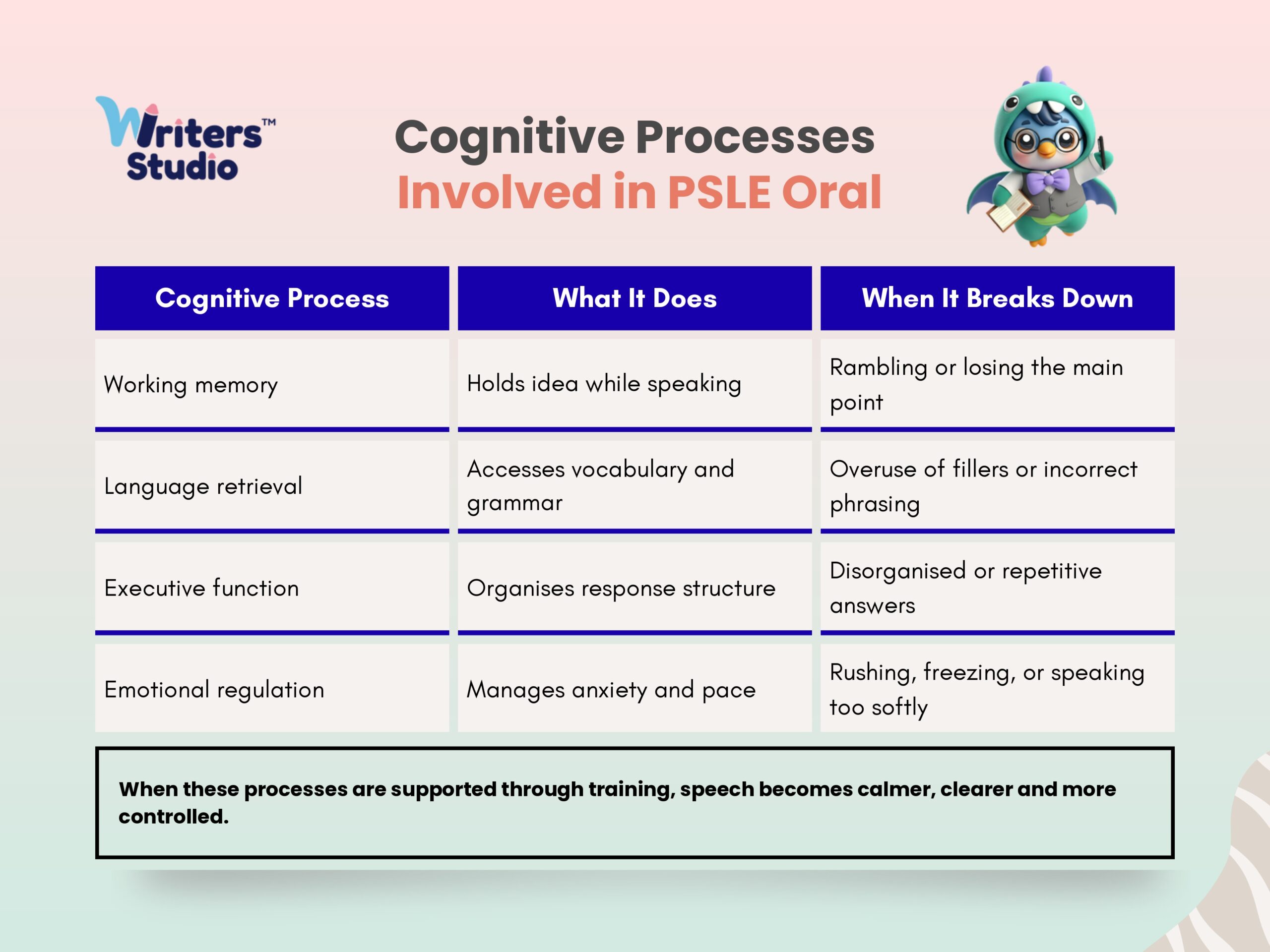
Speaking is a complex cognitive task. It requires idea generation, working memory, language retrieval, sentence construction, and emotional regulation, all at once. When a child feels anxious or unprepared, these systems compete for attention, often leading to rushed speech, incomplete sentences, or unclear answers.
Effective oral training therefore focuses on reducing cognitive overload and strengthening structured thinking, rather than memorising answers or rehearsing scripts.
Evidence-Based Strategies That Improve PSLE Oral Performance
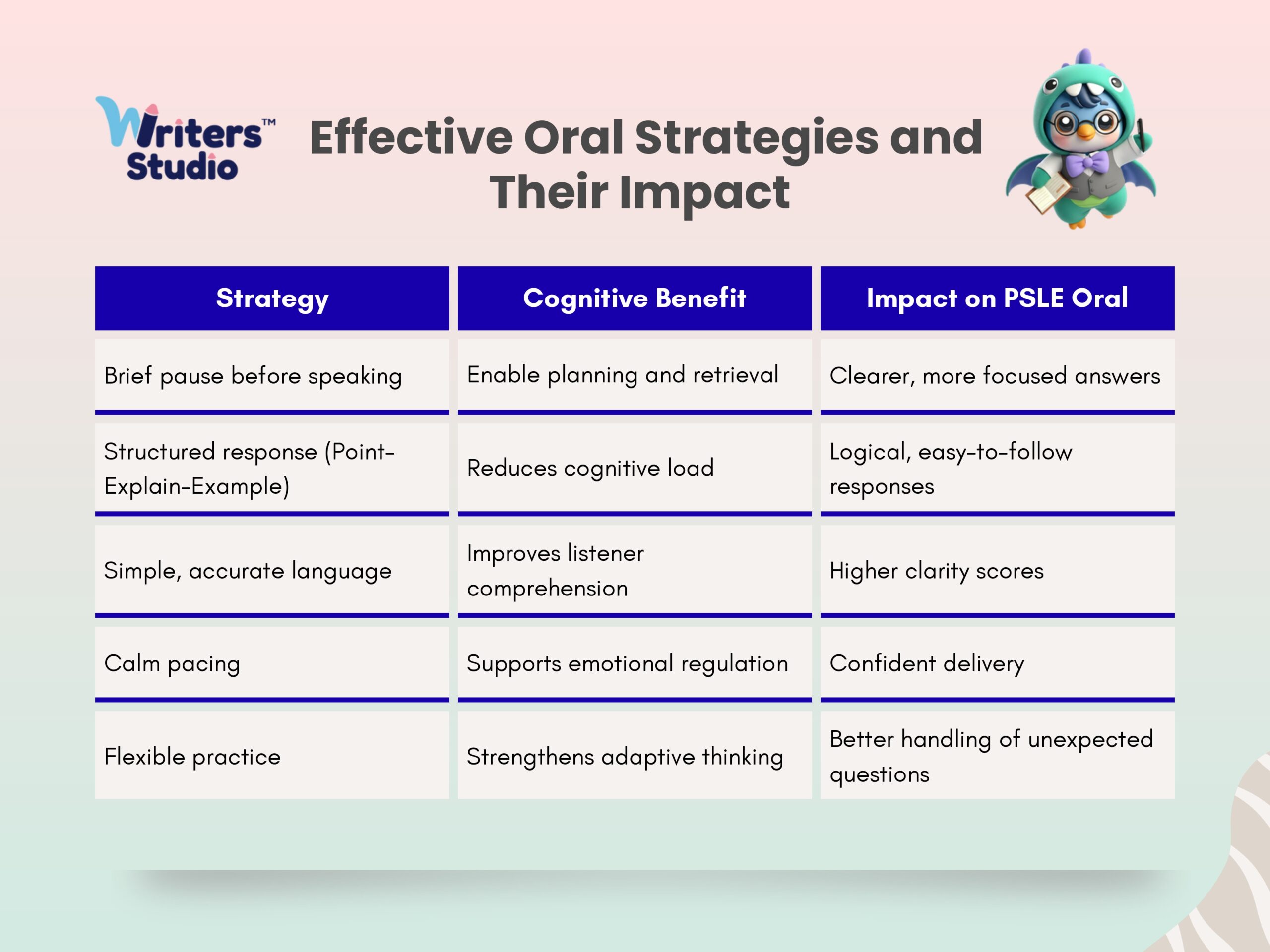
Research and classroom practice consistently show that how a child speaks matters more than how much they say. Small, deliberate strategies can significantly improve oral outcomes.
Pausing briefly before answering allows the brain to organise ideas. Structuring responses into clear parts reduces working memory strain. Using simple, accurate sentences improves comprehension. Regulating pace and tone supports emotional control. Practising flexible responses, rather than memorised scripts, strengthens adaptability when questions change.
These are not exam tricks. They are cognitive supports.
Why This Matters Beyond PSLE
From a developmental standpoint, oral communication is closely linked to reasoning, academic confidence, and long-term language proficiency. Children who learn to speak clearly also learn to think clearly. They are better equipped to explain ideas, participate in discussions, and engage thoughtfully with others.
PSLE Oral is therefore not just an assessment. It is an opportunity to develop a lifelong skill.
Here’s our conclusion.
Speaking well is not an innate talent reserved for outspoken children. It is a trainable cognitive skill grounded in how the brain organises thought and language.
By focusing on clarity, structure, and emotional regulation, students can perform effectively in PSLE Oral, and carry these communication skills far beyond the examination hall.